Over the years, some MLB teams have been so special that they earned a nickname to solidify their legacy—Murderers’ Row (the 1927 Yankees), the Gashouse Gang (the St. Louis Cardinals of the early 1930s) and the Amazin’ Mets (or just “the Amazins”) in 1969.
Of the good teams in the 1970s, only one earned a moniker every baseball fan, sportswriter and announcer knows and uses when they talk about that National League powerhouse—the Big Red Machine.
They were in the World Series four times between 1970 and 1976 and won back-to-back titles, in ’75 and ’76, the last NL team to do so before the Dodgers went back-to-back in 2024 and ’25.
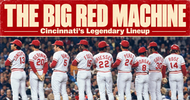
It was a team of stars, led by a Hall of Fame manager, that powered the Machine. The Great Eight—starting players, some of them Hall of Famers (and one famously not)—who won awards, Division titles, pennants, and a couple of World Series crowns.
THE BIG RED MACHINE
Here’s a look at the Great Eight lineup and their famous manager.
Manager Sparky Anderson. The Cincinnati Reds were led by Hall of Fame Manager Sparky Anderson, who managed the team from 1970–1978. Known as “Captain Hook” for pulling his pitchers and relievers fast and often, he led the team to five Division titles, four NL pennants and two World Series championships.
Here’s the regular lineup that played three consecutive seasons under Sparky Anderson in the mid-1970s:
Catcher, Johnny Bench. Bench was the Rookie of the Year in ’68 and took the MVP Award in 1970 when he led the Majors with 45 home runs and 148 RBIs. Bench is in the MLB Hall of Fame.
First Base, Tony Pérez. Pérez played two stints with the Reds, from ’64–’76 and ’84–’86. He was a five-time All-Star with Cincy and hit 287 home runs with the team. He had a key two-run homer in Game 7 of the ’75 Series vs. Boston. Pérez is in the Hall of Fame.
Second Base, Joe Morgan. Morgan played nine of his 20 MLB seasons with the Reds, from 1972–79, coming to the team from the Houston Colt .45s/Astros. He won the NL NVP in 1975 and ’76 and was a five-time Gold Glove Award winner with the team. He was a long-time baseball announcer for the major TV and cable networks, and he is also a Hall of Fame member.
Shortstop, Dave Concepción. He played all 19 seasons of his career with the Reds, from 1970 to 1988. He was a nine-time All-Star and a five-time Gold Glove winner. The Reds retired his number 13 in 2007.
Third Base, Pete Rose. Nobody loved baseball more than Pete Rose or played the game quite like him. “Charlie Hustle” played 19 of his 24 seasons with the Reds, from 1963–’78 and ’84–’86. He won Rookie of the Year in ’63 and NL MVP in ’73, with 230 hits and a .338 average. He played five positions on the team and covered third base during their back-to-back titles. He was a 17-time All-Star and is the MLB all-time hits leader. Rose, famously (and for now), is not in the Hall of Fame.
Left Field, George Foster. Foster was on the Reds from ’71–’81 and is overshadowed by the other stars. He led the Majors in RBIs in 1976 and batted .429 in the sweep of the Yankees in the World Series. In ’77, he was the unanimous NL MVP, batting .320 and hitting 52 home runs.
Center Field, César Gerónimo. Gerónimo was solid in center field, winning four consecutive Gold Glove Awards. He came to the Reds in ’72 from Houston in the trade that also brought Morgan. In 1976, he hit .307 and collected 149 hits.
Right Field, Ken Griffey Sr. Before his son became a superstar, Ken Griffey was a solid player in his own right. He had two stints with the team, 1971–’83 and ’88–’90. His career batting average with the team was .303, and he hit .305 in ’75. The next year, he was the runner-up in the NL batting title race, with a .336 average, 189 hits and 34 stolen bases.
A Lasting Legacy.
The Great Eight played together as starters for three straight years, through the 1975–’77 seasons. Their two best years were their title seasons of ’75 and ’76.
1975. In mid-May, with a 21-21 record, Anderson moved Rose to third base and put Foster in the outfield. The Great Eight lineup was established. The team won 41 of its next 50 games and clinched the NL West Division the first week of September. They won 108 games, 20 games ahead of the second-place Dodgers. Morgan was the NL MVP, batting .327 with 94 ribbies. Bench hit 28 home runs and drove in 110.They swept the Pirates in the National League Championship Series in three games to take the pennant.
- The World Series against the Boston Red Sox is considered one of the best of all time. The Reds came from behind to win Game 7 after losing Game 6 to the Red Sox on Carlton Fisk’s walk-off home run in the 12th inning. Pete Rose was the World Series MVP.
1976. The Big Red Machine and reigning champs ran roughshod over other teams. They won 102 games, and led the National League in every offensive metric, including batting average (.280), runs scored (857) and home runs (210). Morgan was the NL MVP once again, and seven of the Great Eight made the NL All-Star Team.
- They swept the powerful Phillies in the National League Championship Series in three games to take the pennant.
- The World Series this season was a breeze for Cincinnati. They swept the Yankees in four games to become, even to this day, the only team ever to go undefeated in a multi-series playoff structure.
- Johnny Bench was the Series MVP, hitting .533, with two home runs in Game 4.
The Machine downshifts.
Tony Pérez would be traded to Montreal at the end of the 1976 season. The team struggled the next year and finished 10 games back of the Dodgers. The Big Red Machine was losing steam. Cincinnati won the World Series in 1990…their last appearance in the World Series.
The Reds retired the numbers of five of the Great Eight, and their manager:
- Bench, #5
- Morgan, #8
- Concepción, #13
- Rose, #14
- Pérez, #24
- Sparky Anderson, #10
The Cincinnati Reds of the 1970s truly earned the moniker that defined that team—its heart and its spirit—up and down the lineup. They’re a part of MLB history.
Resources: 20th Century Baseball Chronicle, Publications International, Ltd., 1992; Baseball: An Illustrated History, Alfred A. Knopf, Inc.. 1994; tht.fangraphs.com/big-red-machine-turns-50; todayinbaseball.com/big-red-machine; en.wikipedia.org/wiki/Big_Red_Machine; baseball-reference.com; sabr.org/journal/article/the-fall-of-the-big-red-machine